Measuring Snow is Decidedly Not Easy
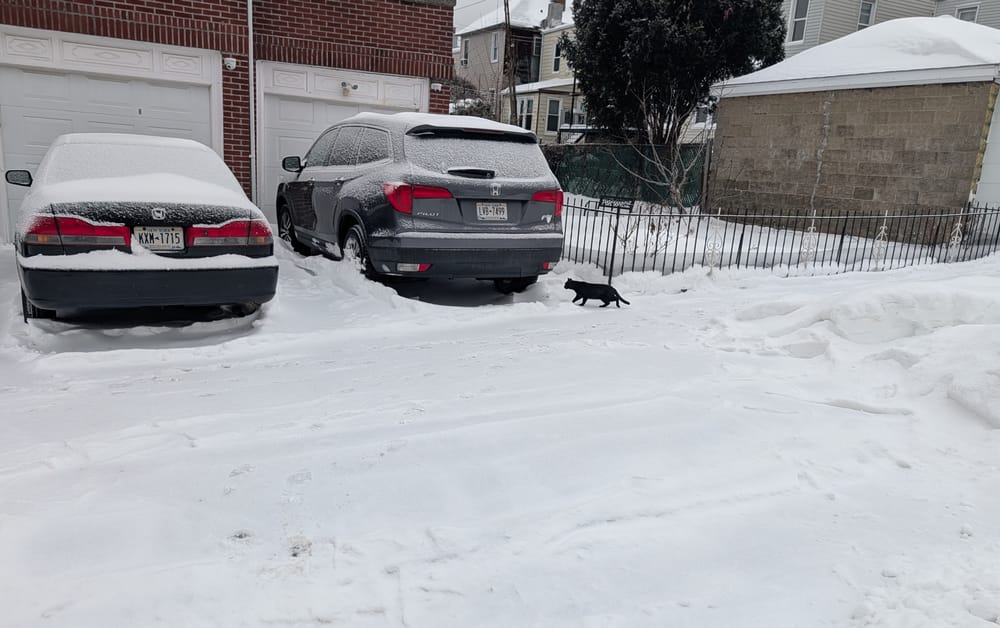
A very big snow storm hit the eastern US over the weekend between freezing plumbing and lots of shoveling, the only thing on my mind was snow over the weekend.
Weather observations have always been decidedly low tech. Part of the reason is that many things don't require a lot of very sophisticated equipment to begin with, often eyeballs, a thermometer that hasn't changed design in a century, a rain gauge that is little more than a cylinder of standardized design, etc.. Another reason is because weather observations need to be done by a huge number of people, across continents, languages, conditions, and economic situations, and low-tech solutions have stood the test of time. Many observations are done by volunteer citizen scientists because there's not enough professional meteorologists around to cover the vast lands of the Earth.
For many weather measurements, things are pretty straightforward. Thermometers that are placed and shielded properly will give consistent readings. Rain gauges can be as simple as going out and observing how much water has collected in a standard cylinder. Wind measurements involve sticking a measuring device in a proper location and letting it do the hard work. Much of these can now be automated so even very remote locations can report data back automatically.
But snow is oddly much more difficult to deal with. It's more sensitive to all sorts of conditions. For one thing, snow blows around after it has landed. Snow compacts over time from melting and gravity but also due to wind and the weight of new snow on top of it. It will travel long distances with the wind. It can melt instantly if it touches a warm surface while sticking on a cooler surface a centimeter away. All of us are familiar with how you can stick a ruler in a dozen places in a level field of snow and come out with a dozen different readings. So, what did weather folks come up with procedures to measure properties of snow?
To understand this better, I read this interesting little book "The Snow Booklet - A Guide to the Science, Climatology, and Measurement of Snow in the United States" by Nolan J. Doesken and Arthur Judson. It's a short read (< 90 pages in all) on snow measurement written by people who clearly love snow and have put a lot of thought into how to measure the stuff. I recommend it because it's written for a general audience (of people who like weather observations) in a friendly tone and includes interesting stories.
The book also makes note of how historical snow measurements can be of varying quality and reliability because of the difficulty in consistently measuring snow. for anyone looking to use historic snow data, it's important domain knowledge to be aware of.
Common equipment for manual snow measurement
- A yardstick or similar measuring stick –for moving around and taking depth measurements in various locations, especially if a permanent snow stake is unavailable
- Snow stake – also common in snowy locations. A wood or similar material stuck into the ground and taller than expected typical snowfall with height markings on it.
- Snowboard – often used in snowy locations, literally a board for measuring snow. Roughly 2x2 ft square board of 1/2-inch thick plywood, with the top side painted white to minimize heat radiation (and thus melting of any snow on it). It's used to provide a flat surface for snow to accumulate on for measurement, or for placing on top of old snow to record new snowfall.
- Standard rain gauge – The standard one used by the NWS, an 8-inch diameter cylinder with a funnel on top and an inner measuring cylinder. The funnel and measuring cylinder have to be removed to measure snow because the funnel often prevents snow from falling in to be measured.
Standard measurement procedure
Overall, there's a lot of "stuff" to measure. Much of it involves newly added snow, plus any pre-existing snow, in various permutations.
- Measure amount of new snowfall in past 24 hours
- Measure total water content of new snowfall
- Measure the amount of total snowfall on the ground, new and old
- Measure water content of new and old snowfall on the ground
- Measure the total precipitation (the total water content) in past 24 hours or since last observation, which includes any rain or other phenomena
- Record the observations
- Transmit the observations to wherever they are supposed to go
What to actually measure
Snowfall
The goal here is to measure the "maximum accumulated depth of snow since the previous day". There's a lot of subtle details in this measurement.
First, windblown snow is an issue. Measurement is ideally taken in an area that is relatively sheltered from wind to avoid high/low spots from drifting but still unshaded. That means finding a spot near the weather station that on average sees level areas of snow on a consistent basis. If drifts and shifts occur, multiple measurements need to be taken and averaged.
If a snow board isn't available to use, a level deck is supposedly a good alternative. Open grass fields is also good but the snow might sit on top of the grass in a way that the grass creates an air pocket which is measured by the measuring stick and adds error. Since these observations are done to the 0.1 inch, it does make a difference.
If snow melts when it touches the ground, even grass, and never accumulates, it's recorded as "trace". If the snow melts when it lands but some of it accumulates, the snowfall for the day is the greatest accumulation observed at any point in the day. If snow accumulates, melts away, then new accumulation is observed, you sum all those accumulations.
Ideally, the snow accumulation is the highest level observed before the snow has time to settle and compact. You'd ideally want people watching the accumulation continuously throughout the day constantly updating the high point. Obviously this isn't practical, so observers need to use their judgement based on what happened during the day and the before the scheduled observation time. Like for example if there was significant accumulation but then rain came and melted much of it down.
You're not supposed to make repeated observations where you record the accumulation and then immediately clear the surface, and then repeating this multiple times during the day intending to sum up the observations. This process consistently over-reports the total accumulation because it gets rid of the natural settling and compacting that happens with true accumulation.
Summer hail isn't counted as snowfall, but winter ice pellets and sleet do count as snowfall.
Snow depth
This is the total dept of snow of both old and new snow to the nearest inch. This one is relatively easy since the permanent snow stake would normally give this reading. Otherwise it's the average of multiple measurements near the observation location.
One issue that comes up is when snow is melting. Areas that see more or less sun tend to melt at vastly different rates. Observers need to exercise judgement by taking the average of the area – if half the area is bare but the other half still has snow, the measurement is the average between the two. If the area has less than 50% coverage, then it's supposed to be recorded as "trace".
Precipitation
This is effectively the water content of all precipitation, including rain, melted snow, hail, whatever. The recommended way to do this is to use the NWS standard rain gauge, remove the inner funnel and measurement cylinder, then place the gauge twice as far as the height of any nearby obstructions like buildings or trees. After that the procedure involves melting whatever is inside the large cylinder, carefully pouring the resulting water into the inner measurement cylinder, and using the calibrated measurement stick that comes with the whole device.
That sounds simple enough, but there are again wrinkles for snow.
Wind is a huge factor, even a small 3 mph wind can dramatically lower what is collected into the gauge. There are records of blizzards that dumped multiple feet of snow leaving only bare traces of snow inside the gauge. That's why core samples of snowfall are taken – which essentially means turning the gauge upside down, cutting out a column of fresh snow like from the snow board, capping with some sheet metal to flip the thing over, and melting the collected snow down to take a measurement.
Snow can stick to the rim of the gauge, which usually makes the hole smaller and restricts precipitation from falling in. It also presents an issue because what part of the snow is supposed to count as being "in" the gauge for measurement? The solution is to take a large flat board and press it to the opening, and whatever falls inside counts.
There have also been cases where snow and ice sticking to the rim completely closes the gauge off and stops new precipitation from entering. This can also happen if the funnel is left in the gauge. There have also been records where sticking snow winds up increasing the diameter of the mouth and actually causing more precipitation to be collected.
Also, the gauges can leak, especially if melted water inside freezes. Observers need to regularly check equipment for issues before it affects measurements.
Water equivalent of snow
Whether it's for new snowfall or total snow, the idea is the same, a core of snow is taken, the snow melted down to water, and then measured. As mentioned above, the idea is to take the rain gauge to cut a snow core.
What's important about this method is that the old adage of 1 inch of water being equal to 10 inches of snow is completely INACCURATE. The density/water content/specific gravity of snow (calculated as inches of water / inches of snow) covers a very wide range of 0.04 to 0.40, with even more extreme observations occasionally found. The value of 0.10 representing the old adage isn't a universal typical value. The actual typical water content varies by location. The authors of the booklet put a lot of emphasis on using this density calculation as an important check on the other measurements because an unreasonably extreme value would indicate some kind of measurement issue.
Hard to automate
The book, published in 1996, also lists some more advanced methods for measuring snow that can be employed by scientists and larger organizations like governments. There are depth sensors that use light or sound to estimate snow depth. The ground apparently emits microwaves and gamma rays (?!) which snow can scatter and is the basis for some large scale snow estimation methodologies by satellite or plane.
I'm sure that in the 30 years since publication, even newer technology has emerged. But again, none of those are available to the vast majority of weather observation sites in the US or across the globe. For everyone else, measuring sticks, boards, and a few large metal tubes is what's available. In fact, the published guides from the NWS for snow spotters continues to adhere to the same methodologies recommended in the book.
Standing offer: If you created something and would like me to review or share it w/ the data community — just email me by replying to the newsletter emails.
Guest posts: If you’re interested in writing something, a data-related post to either show off work, share an experience, or want help coming up with a topic, please contact me. You don’t need any special credentials or credibility to do so.
"Data People Writing Stuff" webring: Welcomes anyone with a personal site/blog/newsletter/book/etc that is relevant to the data community.
About this newsletter
I’m Randy Au, Quantitative UX researcher, former data analyst, and general-purpose data and tech nerd. Counting Stuff is a weekly newsletter about the less-than-sexy aspects of data science, UX research and tech. With some excursions into other fun topics.
All photos/drawings used are taken/created by Randy unless otherwise credited.
- randyau.com — homepage, contact info, etc.
Supporting the newsletter
All Tuesday posts to Counting Stuff are always free. The newsletter is self hosted. Support from subscribers is what makes everything possible. If you love the content, consider doing any of the following ways to support the newsletter:
- Consider a paid subscription – the self-hosted server/email infra is 100% funded via subscriptions, get access to the subscriber's area in the top nav of the site too
- Send a one time tip (feel free to change the amount)
- Share posts you like with other people!
- Join the Approaching Significance Discord — where data folk hang out and can talk a bit about data, and a bit about everything else. Randy moderates the discord. We keep a chill vibe.
- Get merch! If shirts and stickers are more your style — There’s a survivorship bias shirt!